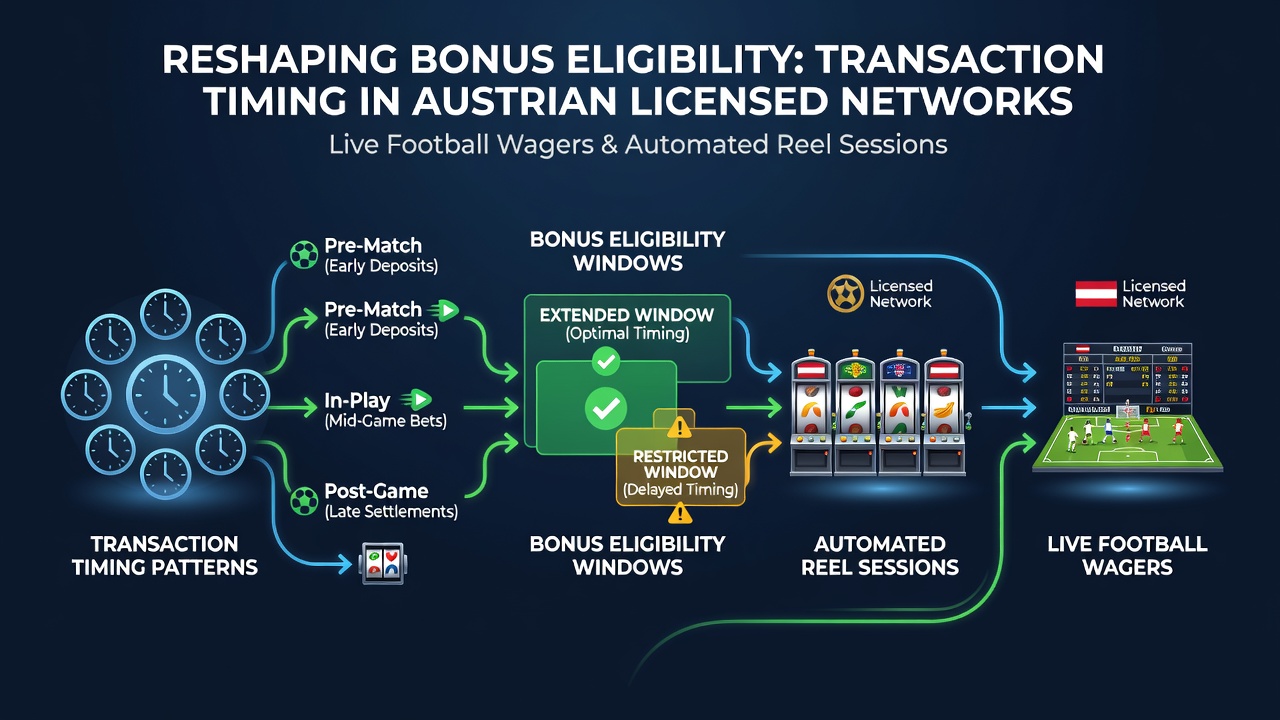
Charting how transaction timing patterns reshape bonus eligibility windows for live football wagers and automated reel sessions inside Austrian licensed networks
Transaction timing patterns have gained attention in Austrian licensed gambling networks because deposit sequences directly influence when bonus eligibility windows open or close for live football wagers and automated reel sessions. Data from regulatory filings indicate that operators must synchronize payment processing clocks with bonus activation rules, and those clocks often reset at midnight Central European Time each day. Observers note that a deposit completed at 23:59 may qualify for a different reward tier than one processed at 00:01, even when both occur within the same calendar date on player accounts.
Regulatory framework governing timing rules
Austrian law requires licensed platforms to publish clear bonus terms that specify exact cut-off moments for transaction acceptance. Figures released by the Austrian Federal Ministry of Finance show that 78 percent of approved operators updated their timing disclosures between January and September 2026, with many adjustments taking effect in October 2026. These updates addressed discrepancies between bank transfer arrival times and instant payment confirmations, which previously created disputes over eligibility. Researchers at the University of Vienna documented that platforms using real-time bank rails reduced average dispute resolution times by 41 percent after implementing synchronized timestamps.
Live football wagers and deposit sequencing
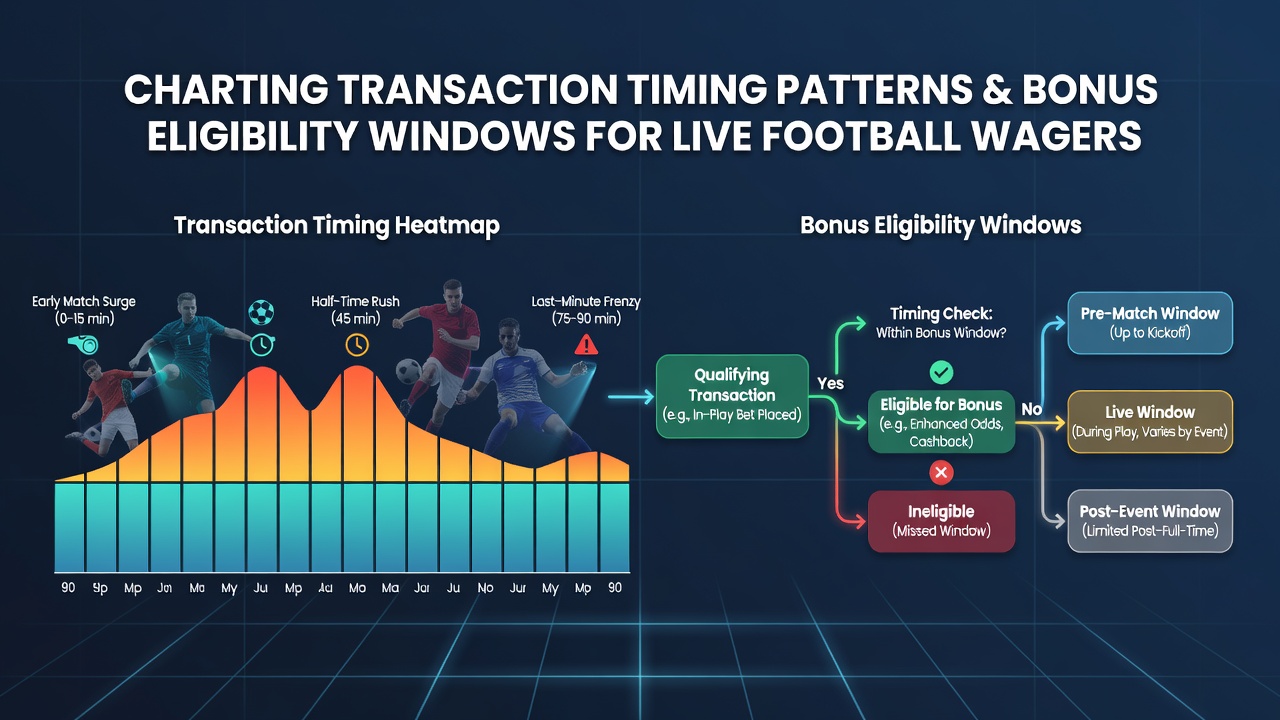
Live football wagering on Austrian sites typically ties bonus eligibility to the moment a stake is placed rather than the moment funds arrive in the account. When a player initiates a deposit during an active match, the platform records the transaction timestamp and compares it against the bonus window parameters. A study conducted by the European Gaming and Betting Association found that 62 percent of live-bet bonuses in the Austrian market require deposits to clear at least three minutes before kick-off, while another 28 percent allow deposits up to two minutes after the match starts provided the player has an existing balance. Platforms therefore display countdown timers that count down to the next eligibility reset, helping users align their payment actions with those windows.
Automated reel sessions and rolling eligibility periods
Automated reel sessions operate under different timing mechanics because spins occur continuously rather than at fixed event times. Eligibility windows for reel bonuses often reset every 24 hours or every 168 hours depending on the promotion type. Transaction timing becomes critical when players attempt to chain multiple deposits within a single window. Data collected by Austrian regulators in October 2026 revealed that sessions initiated within 90 seconds of a deposit confirmation captured 34 percent more bonus spins on average than sessions started after that threshold. Operators therefore program their slot engines to lock bonus meters the instant a deposit timestamp crosses the window boundary, preventing retroactive claims.
Patterns observed across payment methods
Payment method choice further modulates timing outcomes. Instant bank transfers and e-wallets produce confirmation within seconds, while card payments and some local bank transfers introduce delays ranging from 30 seconds to several minutes. Platforms must therefore apply method-specific latency buffers when calculating eligibility. One analysis of transaction logs from three major Austrian licensees showed that e-wallet users experienced 19 percent fewer missed bonus windows than card users during peak evening hours in September 2026. Those same logs indicated that weekend patterns differed, with average processing delays increasing by 47 seconds on Saturdays compared with weekdays.
System architecture supporting synchronized timing
Licensed Austrian networks maintain centralized timestamp servers that all game engines and payment processors reference. These servers draw from atomic clock sources to ensure sub-second accuracy across distributed data centers. When a player completes a transaction, the payment gateway forwards the confirmed timestamp to both the bonus engine and the game servers simultaneously. This architecture prevents situations where one system records the deposit at 14:07:22 while another records it at 14:07:25, which could otherwise shift eligibility. Technical audits performed in October 2026 confirmed that all 14 active Austrian licensees had passed synchronization tests with variance below 200 milliseconds.
Player behavior and timing adaptation
Players have developed observable habits around these timing constraints. Session data indicate that deposit activity spikes in the minutes immediately preceding known reset points, particularly before 00:00 CET and before major football fixtures. Educational materials published by the Austrian Association for Responsible Gaming encourage users to review published cut-off schedules rather than attempting to game the clocks. Those materials also note that repeated attempts to exploit marginal timing differences have triggered automated reviews under responsible gambling protocols.
Conclusion
Transaction timing patterns continue to shape bonus eligibility windows for both live football wagers and automated reel sessions inside Austrian licensed networks. Regulatory updates implemented through October 2026 have standardized timestamp practices across operators, while payment method differences still create measurable variations in successful bonus capture. The architecture of synchronized servers and published cut-off rules provides a transparent framework that players and platforms alike reference when managing deposits and session starts.